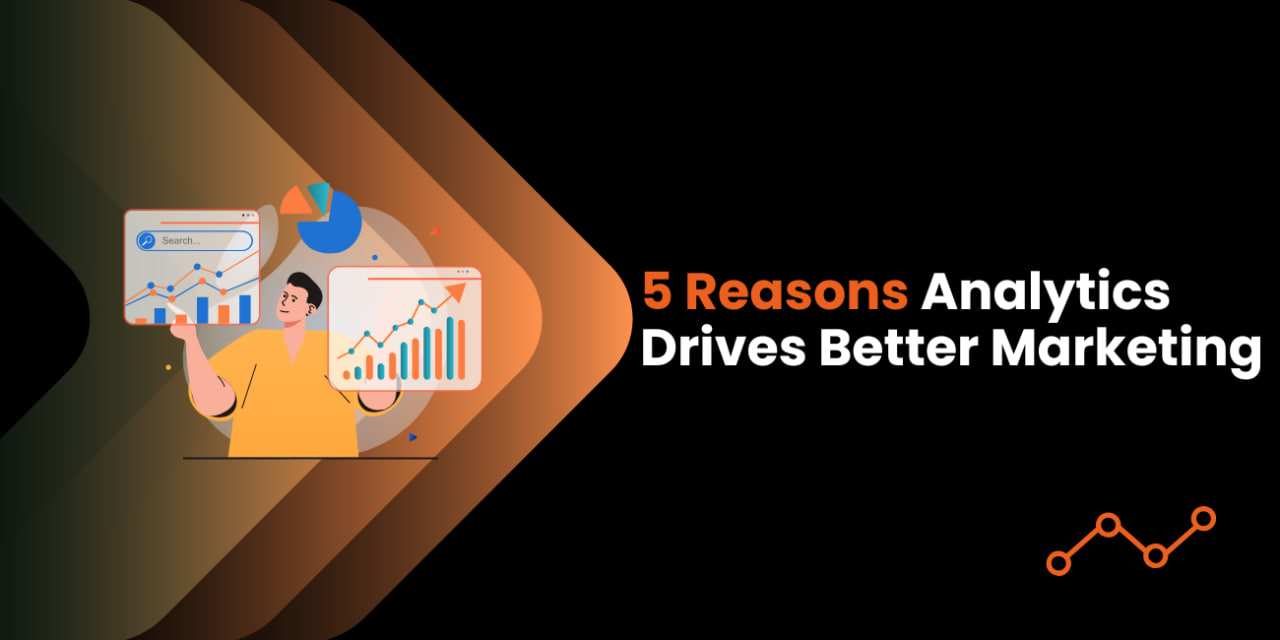
We don’t work on assumptions. We work on clarity. Before launching a campaign, running ads, or even choosing a keyword, we first look at the data—because real growth only comes from informed decisions, not guesswork. This is exactly where business analytics becomes the backbone of everything we do.
From tracking how users behave on a website to understanding what actually drives conversions and revenue, every move is guided by insights. This is how marketing stops being a risky expense and starts becoming a predictable growth system. When you truly understand how business analytics improves digital marketing performance, you don’t just get traffic—you get results.
This is how we help startups grow faster and established brands grow stronger—step by step, insight by insight. Now, let’s break down why business analytics is the real power behind high-performing digital marketing today.
1. Data-Driven Decision Making Eliminates Guesswork
Running marketing without analytics is like driving with your eyes closed. You may move forward, but you never really know where you’ll end up. Business analytics replaces assumptions with real, measurable user behavior such as:
- Where your traffic is coming from
- How users interact with your pages
- What paths lead to conversions
- Where users drop off
- Which campaigns actually bring in sales
Because of this, marketers stop asking “What might work?” and start asking “what’s actually bringing results”
This shift from opinions to proof is the true foundation of how business analytics improves digital marketing performance.
2. Deeper Customer Understanding Improves Targeting
Every click, scroll, enquiry, and purchase tells a story. Business analytics helps you read that story clearly. It turns scattered user activity into meaningful customer insights.
With proper analytics in place, businesses can:
- Identify high-intent users
- Understand what people search for and respond to
- Track how long buying decisions take
- Segment audiences based on value and behavior
This makes it easier to personalize campaigns, reduce unnecessary ad spend, and attract better-quality leads. This is exactly how to use business analytics for successful digital marketing in a highly competitive environment.
3. How Business Analytics Strengthens SEO, Paid Ads & PPC
Analytics is the engine that runs performance marketing. It brings clarity and control to services like SEO, PPC, paid advertising, and website optimization.
Business Analytics in SEO
Today, SEO is no longer about just ranking—it’s about generating real business. Analytics helps by:
- Identifying keywords that actually convert
- Tracking which landing pages generate enquiries
- Monitoring how users behave on content
- Detecting technical issues that affect conversions
Brands working with an SEO Company in Chennai now expect SEO to be completely data-driven and revenue-focused, not just traffic-oriented.
Business Analytics in PPC & Paid Ads
Paid ads without proper tracking can burn money fast. With analytics, advertisers can:
- Track real leads and sales instead of just clicks
- Measure cost per lead and ROAS clearly
- Improve ad creatives based on performance
- Instantly pause keywords or ads that don’t perform
Website Analytics for Conversion Optimization
Your website is where all digital marketing efforts meet. Businesses working with Website Development Companies in Chennai now demand analytics-first websites that focus on:
- User experience
- Speed and performance
- Lead form tracking
- Conversion optimization
4. Smarter Budget Allocation & ROI Optimization
One of the most practical benefits of business analytics in marketing is intelligent budget control.
With analytics, marketers can:
- Put more budget into high-performing channels
- Cut spending on low-quality traffic
- Track ROI daily instead of monthly
- Forecast revenue more accurately
Instead of spreading budgets blindly across platforms, businesses invest where returns are actually coming from—making growth both safer and more scalable.
5. Predictive Analytics for Future Growth Planning
Analytics today is not only about understanding the past. With AI-driven predictive models, businesses can now forecast:
- Which leads are most likely to convert
- When seasonal demand will rise
- How much a customer is worth long-term (CLV)
- Which users are likely to drop off
- Expected future revenue
This transforms marketing from a reactive activity into a proactive growth system—one of the biggest factors shaping digital marketing strategies in 2026.
How Business Analytics Helps Startups vs Established Businesses?
Business analytics supports growth at every business stage—but the way it helps startups and established companies is different.
How Business Analytics Helps Startups?
For startups, every decision matters and every rupee counts. Analytics helps them grow without burning capital.
Key advantages include:
- Faster market validation
- Smarter budget utilization
- Early conversion improvement
- Quick identification of winning channels
- Faster product–market fit
For startups, analytics is the fastest way to strengthen how business analytics improves digital marketing performance with minimal risk.
How Business Analytics Helps Established Businesses?
For established brands, the focus shifts from survival to scale and market leadership.
Key benefits include:
- Advanced audience segmentation
- Higher customer lifetime value
- Accurate multi-channel attribution
- Better profit optimization
- Reliable future forecasting
This is how large businesses master how to use business analytics for successful digital marketing at scale.
Startup vs Established Business: Analytics Impact Comparison
| Area | Startups | Established Businesses |
| Primary Goal | Lead generation & validation | Market domination |
| Budget Control | Prevent wastage | Maximize profitability |
| Data Usage | Test & optimize | Predict & automate |
| Growth Approach | Experiment & scale | Optimize & dominate |
| ROI Tracking | Daily learning | Long-term forecasting |
Trending Analytics & Digital Marketing Technologies in 2026
The analytics landscape is moving faster than ever. The most impactful trends today include:
- GA4 & Event-Based Tracking – Better micro-conversion tracking
- AI-Powered Predictive Marketing – Smarter bidding, scoring & forecasting
- Privacy-First & Cookieless Analytics – First-party and server-side tracking
- Customer Data Platforms (CDPs) – One unified customer data system
- Real-Time Growth Dashboards for SMEs – Actively implemented by SME Digital
Industry-Specific Use of Business Analytics
Analytics now plays a key role across industries such as:
- Digital Marketing for Doctors – Patient tracking & lead attribution
- Digital Marketing for Real Estate – High-intent buyer analysis
- E-commerce – Product journey & cart tracking
- SaaS – Churn prediction & funnel improvement
- Professional Services – Lead quality scoring
Today, almost every industry depends on accurate data for steady profitability.
Key Benefits of Business Analytics in Marketing
|
Benefit |
Business Impact |
| Precise Targeting |
Higher lead quality |
|
Real ROI Tracking |
Better budget control |
|
Conversion Optimization |
More sales |
|
Predictive Insights |
Smarter planning |
| Automation Support |
Faster scaling |
|
Fraud & Wastage Reduction |
Lower risks |
These are the real-world benefits of business analytics in marketing that drive consistent performance today.
FAQs: Business Analytics & Digital Marketing
- How does business analytics improve digital marketing performance?
It helps businesses target the right audience, control budgets, increase conversions, and clearly track ROI instead of relying on assumptions. - How can business analytics be used for successful digital marketing?
By monitoring KPIs, understanding user journeys, testing campaigns continuously, and improving strategies using real-time data. - Is business analytics useful for startups?
Yes. It prevents budget loss, identifies fast-performing channels early, and supports smarter growth with limited resources. - What are the main benefits of business analytics in marketing?
Better ROI, deeper customer insights, predictive growth, improved automation, and more efficient campaigns. - Which tools are commonly used for marketing analytics?
GA4, CRM systems, Looker Studio, heatmap tools, AI analytics platforms, and CDPs.
Wrapping It Up
Business analytics today is not a luxury—it is the decision engine of modern digital marketing. From startups testing their market to enterprises competing for industry leadership, analytics clearly determines who grows steadily and who falls behind.
Brands that truly understand how business analytics improves digital marketing performance, apply the benefits of business analytics in marketing, and know how to use business analytics for successful digital marketing, are the ones that achieve sustainable, scalable, and profitable growth—not by luck, but by strategy.
At SME Digital, analytics is never an add-on. It is the foundation of every SEO strategy, PPC campaign, paid ad, and performance decision we build. This is how we ensure our clients don’t just get visibility—they get real, measurable business results.